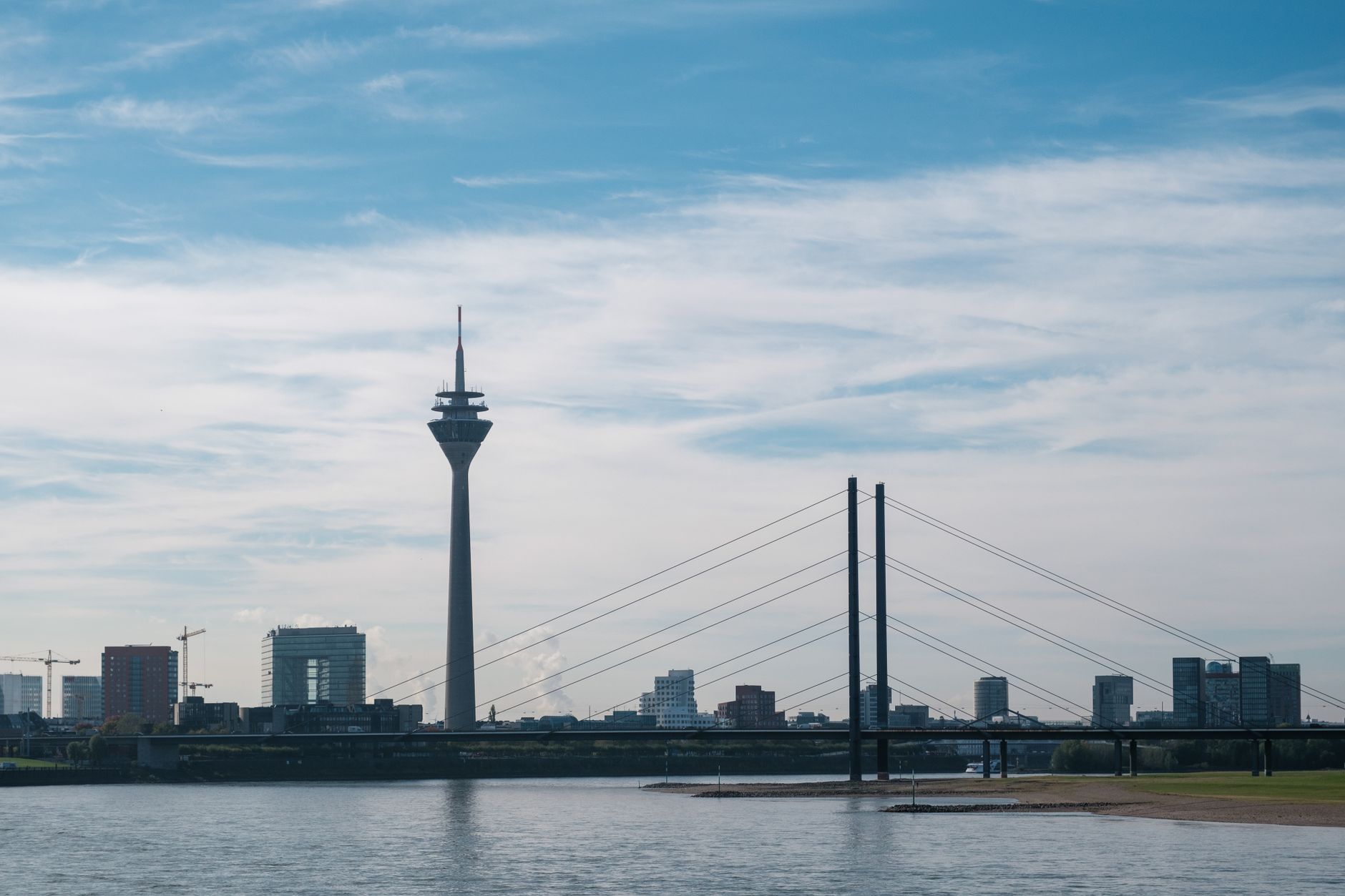
Why Dusseldorf Attracts Supply Chain Consulting Projects
Dusseldorf sits at the centre of one of Europe's most active logistics and supply chain corridors. With major industrial clusters in the Rhine-Ruhr region, direct access to the Port of Duisburg — the world's largest inland port — and a dense concentration of international manufacturing and trading firms, the city consistently draws large-scale consulting engagements.
Supply chain transformation projects in Dusseldorf typically involve teams of five to fifty consultants, often deployed for three to eighteen months. These aren't standard business trips. They require structured accommodation planning, not ad hoc hotel bookings. For HR managers and procurement officers managing the logistics, getting housing right from the start directly affects project cost, team performance, and attrition.
The Accommodation Challenges Specific to Consulting Teams in Dusseldorf
High Demand in a Competitive Rental Market
Dusseldorf's residential rental market is tight. The city has a low vacancy rate across furnished apartments, and demand from both corporate tenants and permanent residents keeps availability constrained. For consulting firms arriving mid-project — or scaling teams up quickly — finding quality furnished apartments at scale is a genuine operational problem.
Staggered Arrivals and Rolling Contract Periods
Consulting projects rarely deploy all team members simultaneously. Staggered start dates, shifting contract lengths, and the need to adjust headcount mid-project are the norm. Standard lease agreements in Germany don't accommodate this well. You need a housing partner with flexible terms and the operational infrastructure to manage multiple tenancies running in parallel with different end dates.
Compliance and Duty of Care
Germany has specific requirements around rental agreements, registration (Anmeldung), and tax documentation. For companies sending consultants on international assignment, ensuring proper compliance — including accommodation documentation that satisfies travel expense policies — is non-negotiable. This is where an experienced housing partner adds direct value beyond just sourcing beds.
What a Structured Accommodation Approach Looks Like for Dusseldorf Projects
The most effective approach for supply chain consulting deployments in Dusseldorf follows a straightforward framework:
Volume planning before mobilisation. Understand how many consultants will be on-site, their deployment windows, and the districts that make sense given the project location — whether that's the central business district, Medienhafen, or areas closer to industrial sites on the city's outskirts.
Centralised sourcing through a single supplier. Working with multiple landlords or short-term platforms fragments your cost tracking, creates inconsistent quality, and multiplies your administrative overhead. Rentaborg's corporate housing services consolidate this into a single managed account, with standardised apartment quality and consolidated billing.
Flexible lease structures. Minimum stay terms, rolling extensions, and early exit clauses need to be negotiated into agreements from the outset. Retroactively renegotiating mid-project is costly and disruptive.
Local support and rapid response. When a consultant arrives to find a maintenance issue or a check-in problem, the response time matters. Local management capacity in Dusseldorf is a practical requirement, not a premium feature.
Districts Worth Considering for Consultant Housing in Dusseldorf
Location selection for consultant teams should balance commute time, amenity access, and cost. Key areas include:
- Stadtmitte and Pempelfort — central, walkable, strong transport links, higher cost but minimal commute friction
- Derendorf — increasingly popular with corporate tenants, good apartment stock, slightly lower price point
- Flingern and Oberbilk — more affordable, strong transport connectivity, suitable for longer deployments where cost containment is a priority
- Düsseldorf-Hafen / Medienhafen — premium accommodation, well-suited for senior team members or client-facing consultants
For corporate housing in Dusseldorf, district-level knowledge matters when placing teams of different seniority levels and project roles.
How Procurement Teams Should Evaluate Housing Suppliers
When assessing accommodation suppliers for a Dusseldorf consulting deployment, the right evaluation criteria go beyond unit price per night.
Operational Capacity
Can the supplier actually deliver at the volume and pace your project requires? Ask for evidence of comparable deployments — team size, duration, number of concurrent tenancies managed. References from other consulting firms or project-based clients carry more weight than general testimonials.
Contract Flexibility
What are the minimum terms? What triggers early release clauses? Are extensions handled automatically or do they require renegotiation? These terms have direct financial implications across a large team over a long project.
Compliance Infrastructure
Does the supplier handle Anmeldung support? Can they provide documentation for expense reimbursement and tax compliance? For multi-national consulting firms, these aren't edge cases — they're standard requirements.
Integrated Billing
Consolidated invoicing across all units, with cost-centre coding if required, significantly reduces finance team overhead. A supplier who can't accommodate this creates downstream administrative problems at scale.
Rentaborg's staff and project housing solutions are built specifically for these operational requirements — not retrofitted from standard residential lettings.
Coordinating With HR During Consultant Deployment
HR managers often inherit accommodation coordination mid-process, after a project has already been mobilised. The better approach is early involvement — ideally at the proposal or contract stage with the consulting firm itself.
Clear handoff protocols between the consulting firm's project management team and HR are essential. Who approves accommodation spend? Who handles individual consultant queries? Who manages changes when team composition shifts?
Defining these responsibilities before deployment avoids the friction that typically emerges at scale. For companies managing multiple concurrent projects across Europe, it's worth reading about the broader benefits of corporate housing for business travelers to understand how a consistent housing strategy reduces cost and complexity across regions.
You can also review available properties across Europe to assess Rentaborg's inventory depth before committing to a supplier conversation.
Looking for corporate housing in Dusseldorf? Contact Rentaborg for a tailored proposal.